CHARACTER LOCOMOTION
DESCRIPTION
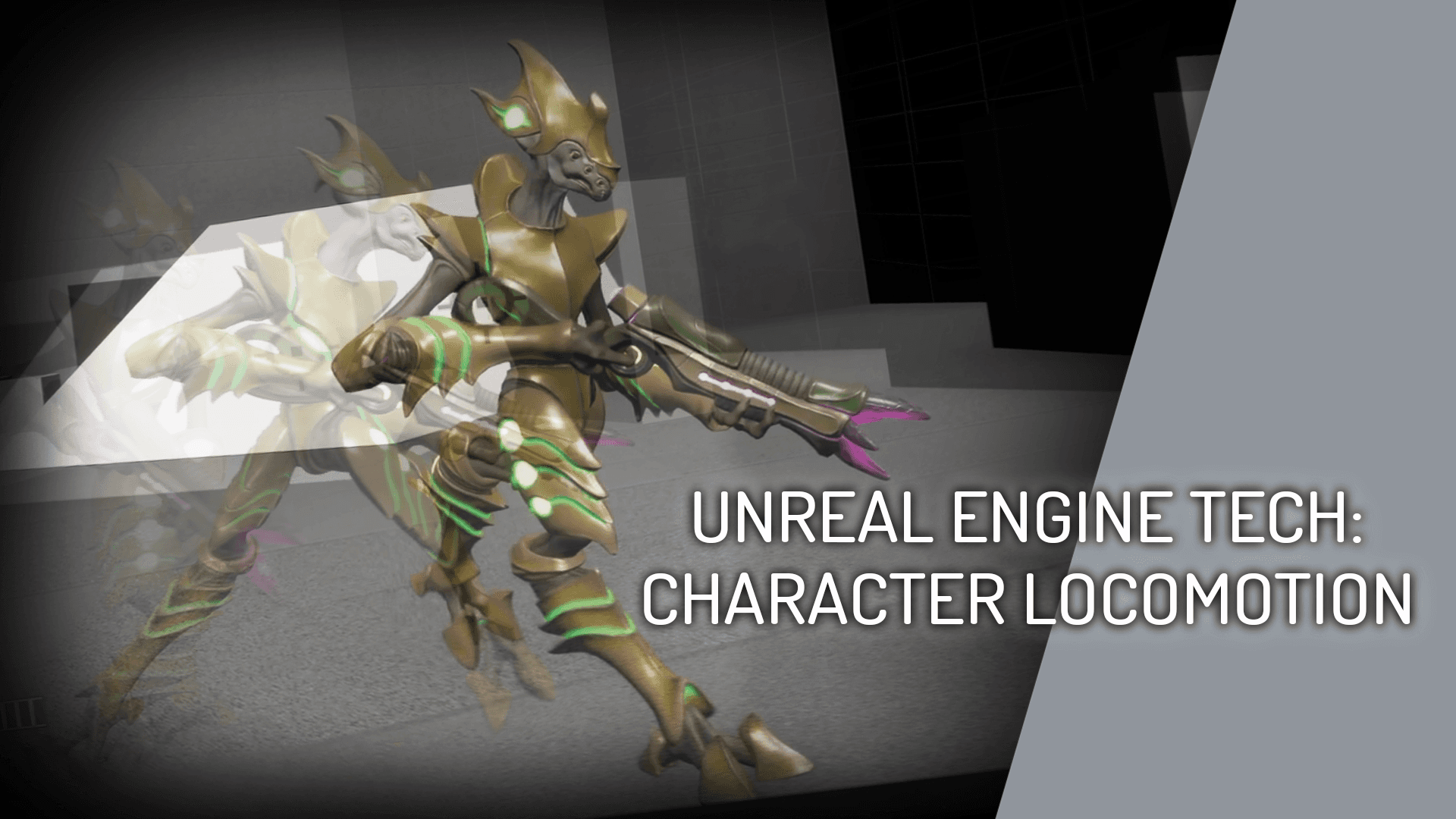
Demonstrated here is my universal approach to character locomotion. It is based on 3 key pillars: Movement Direction Focus, Omni-Directional Movement, and Stationary Turning. These core principles are anatomically agnostic, meaning they can be applied to characters of nearly any proportion.
CHARACTER LOCOMOTION
DESCRIPTION
Demonstrated here is my universal approach to character locomotion. It is based on 3 key pillars: Movement Direction Focus, Omni-Directional Movement, and Stationary Turning. These core principles are anatomically agnostic, meaning they can be applied to characters of nearly any proportion.
EXAMPLES
EXAMPLES
Below are some examples of this approach used in actual game contexts.
Below are some examples of this approach used in actual game contexts.
MOVEMENT DIRECTION FOCUS
MOVEMENT DIRECTION FOCUS
We want to ensure that our character is always anticipating the direction they intend to move in. We do this by reducing the rotation rate of the character blueprint, and using some kind of head/neck/upper body rotation setup which reacts to the direction of the character's force/input direction. In this example, we use a Control Rig to drive that head/neck/upper body rotation.
We want to ensure that our character is always anticipating the direction they intend to move in. We do this by reducing the rotation rate of the character blueprint, and using some kind of head/neck/upper body rotation setup which reacts to the direction of the character's force/input direction. In this example, we use a Control Rig to drive that head/neck/upper body rotation.


OMNI-DIRECTIONAL MOVEMENT
OMNI-DIRECTIONAL MOVEMENT
Next, we want to ensure the character's legs/lower body react appropriately to the force direction of the character relative to the body rotation. We do this by setting up a movement blendspace which accounts for different rotational delta values between the direction the character is facing, and the force direction, as well as the current velocity. In this example, we are using an 8 directional setup for each speed (walking and jogging).
Next, we want to ensure the character's legs/lower body react appropriately to the force direction of the character relative to the body rotation. We do this by setting up a movement blendspace which accounts for different rotational delta values between the direction the character is facing, and the force direction, as well as the current velocity. In this example, we are using an 8 directional setup for each speed (walking and jogging).


STATIONARY TURNING
STATIONARY TURNING
Finally, we want to account for how we move when simply turning in place. This is done through another movement blendspace that is only actively contributing to the current character pose when stationary, and is driven by rotational velocity.
Finally, we want to account for how we move when simply turning in place. This is done through another movement blendspace that is only actively contributing to the current character pose when stationary, and is driven by rotational velocity.


